
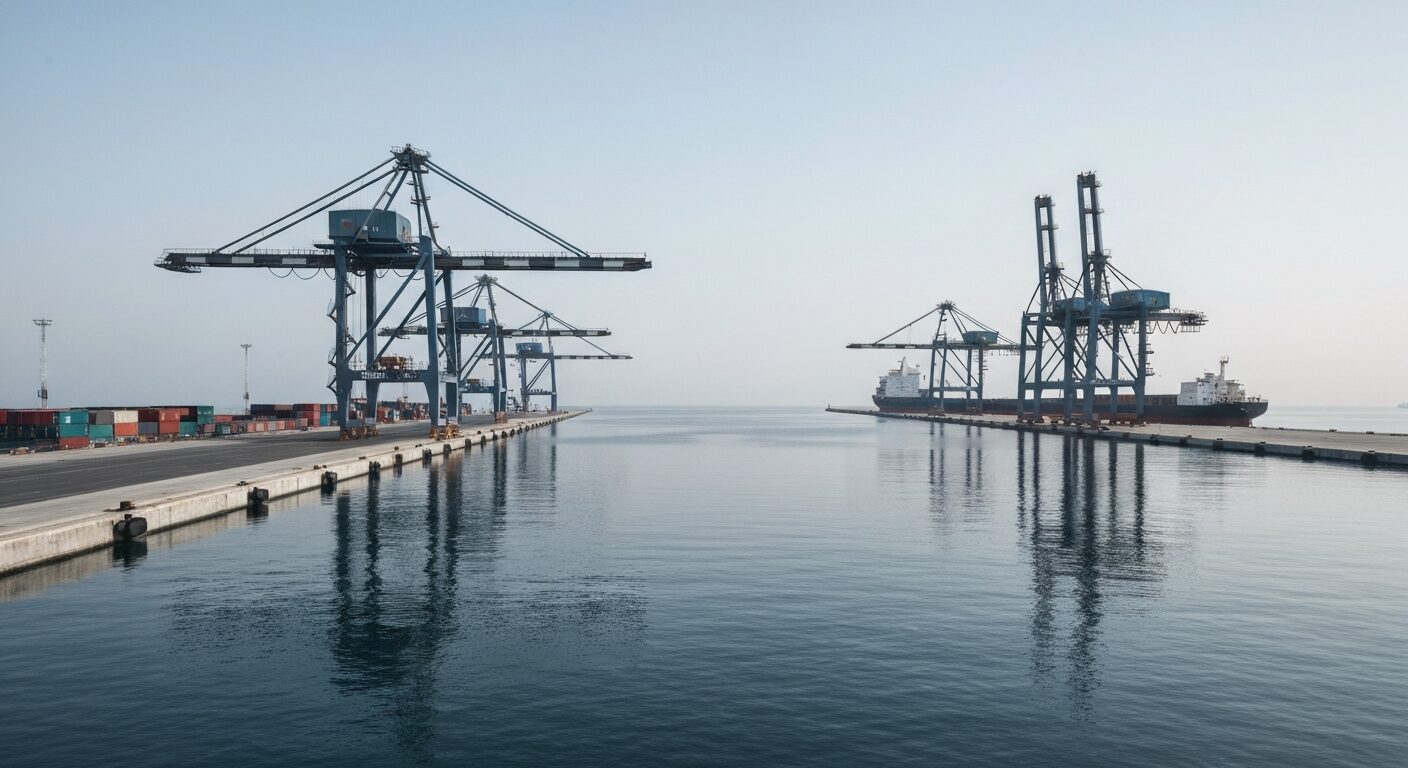
Thessaloniki Port Expands Rail Freight Connectivity in Southeastern Europe
Summary
The Port of Thessaloniki, Hellenic Train, and Bulgarian State Railways have formally signed a Memorandum of Understanding to significantly enhance rail freight connectivity across Southeastern Europe.\n\nThis strategic agreement lays the groundwork for developing a robust rail cargo corridor, substantially boosting intermodal transport capabilities within the region.
\n\n
What Happened
\n
The Memorandum of Understanding (MoU) formalizes a critical collaboration between Greece’s Port of Thessaloniki, the national railway operator Hellenic Train, and Bulgarian State Railways (BDZ).\n\nThis trilateral agreement establishes a foundational framework aimed at fostering greater efficiency and capacity in rail freight services.
\n\n
The primary objective is to develop a dedicated rail cargo corridor, strategically centered around the Port of Thessaloniki.\n\nThis move reinforces the port’s vital role as a pivotal regional transport and logistics hub, connecting maritime routes with land-based networks.
\n\n
Specifically, the initiative targets substantial improvements in rail freight services that link the port with key economic centers and industrial zones throughout Southeastern Europe.\n\nThe agreement seeks to streamline cross-border logistics, reduce transit times, and increase the overall volume of goods moved efficiently across international borders.
\n\n
This collaboration will focus on optimizing existing rail infrastructure through targeted investments and exploring new joint projects designed for long-term sustainability.\n\nSuch efforts are essential for integrating various transport modes, thereby creating a more seamless, resilient, and responsive logistics network across the Balkans and beyond.
\n\n
Why It Matters for Travelers
\n
While this agreement directly addresses freight transport, its ripple effects significantly impact the broader travel ecosystem, creating a more interconnected region.\n\nImproved efficiency in goods movement can lead to more stable supply chains, which may result in lower costs for consumer products and services relevant to travelers.
\n\n
Enhanced transport infrastructure development often precipitates broader economic growth, indirectly benefiting local economies and supporting industries such as tourism.\n\nA more robust logistics framework can make destinations more accessible and attractive for both business and leisure travel over time.
\n\n
Furthermore, investments in rail infrastructure for freight often pave the way for future upgrades or expansions in passenger rail services.\n\nTravelers might eventually see improved train connections, more modern rolling stock, or better accessibility to major travel hubs as a result of these foundational agreements.
\n\n
A well-functioning intermodal transport system reduces congestion on roads and minimizes environmental impact, contributing to more sustainable travel environments.\n\nThese foundational steps towards regional connectivity are crucial for the long-term development of European travel infrastructure.
\n\n
What to Expect Next
\n
The signing of this MoU represents a significant commitment and signals the commencement of more detailed planning phases and potential strategic investments into rail infrastructure.\n\nTravelers and businesses should anticipate a gradual but sustained improvement in regional transport efficiency over the coming years as these plans materialize.
\n\n
Further agreements, technical studies, and specific project announcements are highly anticipated as the partners work towards the full implementation of the rail cargo corridor.\n\nThese developments will likely involve detailed timelines and funding allocations for various infrastructure enhancements.
\n\n
In the short to medium term, a greater focus on operational coordination and digital integration between the railway operators and the port is expected.\n\nThis includes the development of unified booking systems and tracking capabilities for cargo, which can indirectly set precedents for passenger services.
\n\n
Ultimately, this agreement aims to solidify the Port of Thessaloniki’s strategic position and enhance Southeastern Europe’s role in global trade and logistics.\n\nTravelers may experience a more connected and economically vibrant region, fostering new opportunities for exploration and access.
\n\n
With global travel constantly evolving, staying informed matters. Be sure to sign up for our newsletter and follow us on social media to stay up to date on the latest travel news and industry updates.